At 4:30 on Monday morning, Ethan and I walked to the Engineers without Borders office for the first site visit of our internship. Our team of eight interviewed communities in Pachut and Chuatzité and performed a basic technical study for potential water projects.
Ethan and his team had a 15 minute walk to visit Chuatzité where they collected water samples from several homes and a school. At 6’3″, Ethan looms a foot or two over most Guatemalans, and he came to Guatemala without a lot (or really any) Spanish experience. That morning, one of the community members said, “Cuidado con tu cabeza,” or “Careful with your head,” as Ethan ducked through their low door frames. With his newly learned Spanish from our week of classes, he confidently replied, “En Guatemala, siempre tengo cuidado con mi cerveza,” which actually means, “In Guatemala, I always have caution with my beer.” He received some strange looks from that Guatemalan family…
I have definitely had my fair share of embarrassing language hurdles as well, but I recently experienced the fascinating perspective of language on my trip to Pachut. Of the twenty-one indigenous languages in Guatemala, I have worked with a lot of people in the past three years who speak the Mayan languages Kʼicheʼ, Q’eqchi, and Kaqchikel. I learned the Kʼicheʼ phrase for, “How are you?” literally translates to, “What is the state of your heart?” which is amazingly and uncomfortably deep to me.
Speaking of the state of my organs, I had started feeling ill that morning which was only escalated by the winding roads through the mountains, and I ended up leaning out the truck window to empty my breakfast down the side of the door. As a lover of roller coasters and someone not typically susceptible to motion sickness, I ended up being sick for the rest of the week. Sickness could not detract from the views I had during my site visit, though. The Volcán de Fuego is one of three active volcanoes in Guatemala, and despite neighboring Pachut, the community was on the opposite side of Fuego’s devastating eruption last summer and thankfully not destroyed.
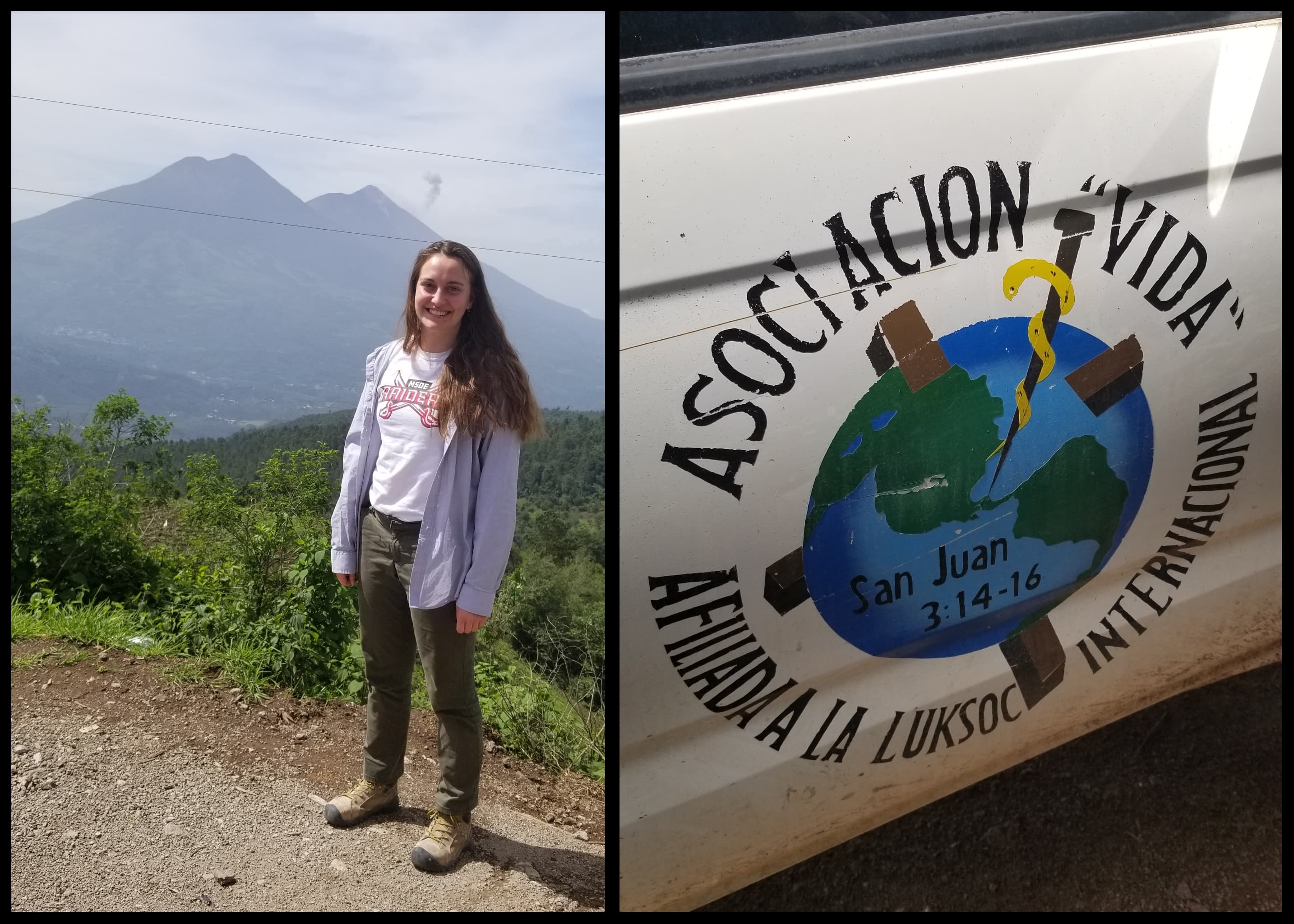
Ethan’s team and my team were supposed to reconvene for lunch and our meeting at 12:30 with the Guatemalan Christian organization, Agua Viva, meaning Living Water. But my “hour-long walk” to gather water samples ended up being a little more intense than I expected, especially while feeling subpar. My coworker Moises and I followed three Guatemalan men who used machetes to cut a new path in thick rain forest down an extremely steep mountain for almost two hours. We safely arrived to the bottom after I slipped and fell at least four times, destroying the palm of my left hand.
I had a strange God moment that morning. As I laced up my steel toes at 4:15 am, I found a leather glove crammed into the toe from packing, but it was only the one glove. I was about to leave it behind when I decided I might as well pack it. At the bottom of the mountain, I remembered I had that glove in my bag. I thought to myself, “Hey God, wouldn’t it be crazy if the hand I cut up was the same as my single glove I brought?” Yep. A left glove. Life, especially in Guatemala, is continually demonstrating it’s craziness.
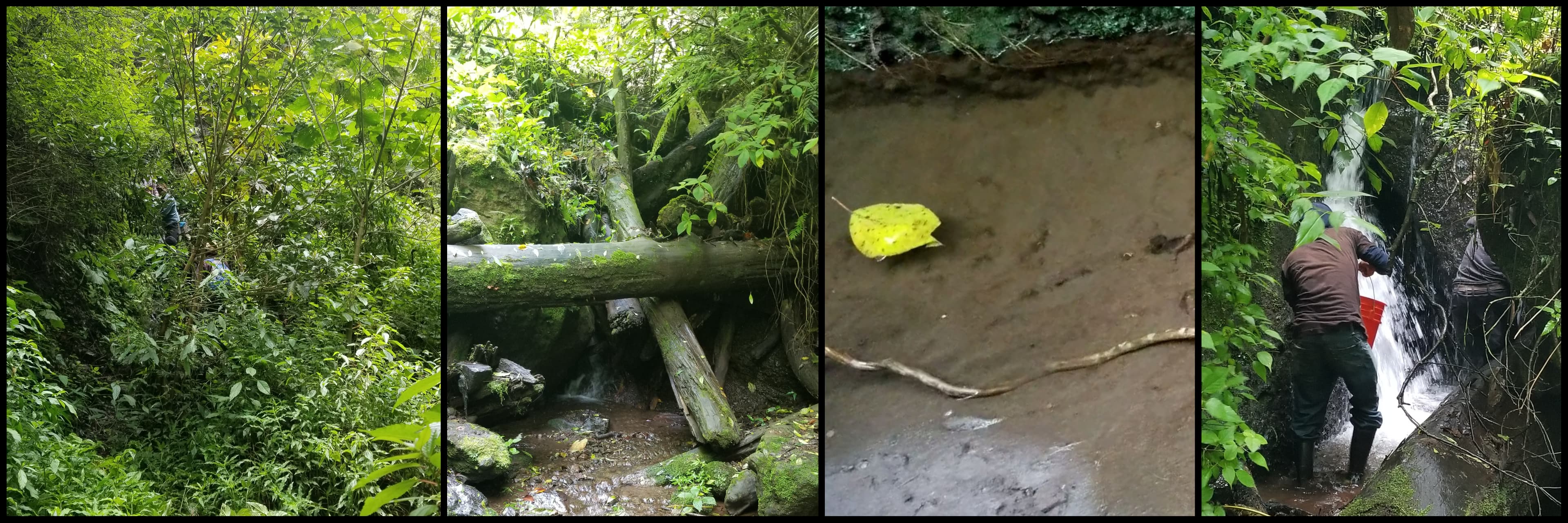
The team walked (or maybe waded, crawled, and bouldered would best describe our movement) up the river for a half mile where Moises and I collected water samples and recorded the river’s flow rate. To do this, we built a small dam and timed a leaf floating the length of our “standard” vine and timed how long it took to fill a bucket under a small waterfall. We also tried to mark certain locations on Google maps, but there was no service in the middle of nowhere. We walked back down the river, and before we began the ascent, the Guatemalans offered me a coke. I accidentally left my water bottle in the truck at the top of the mountain so I gratefully accepted. They pulled out plastic bags, straws, and a two liter bottle of 7-Up. After finally stopping for this short break, I realized my muscles were shaking and fatigued from just the descent. And oh boy, if I thought the descent was difficult…
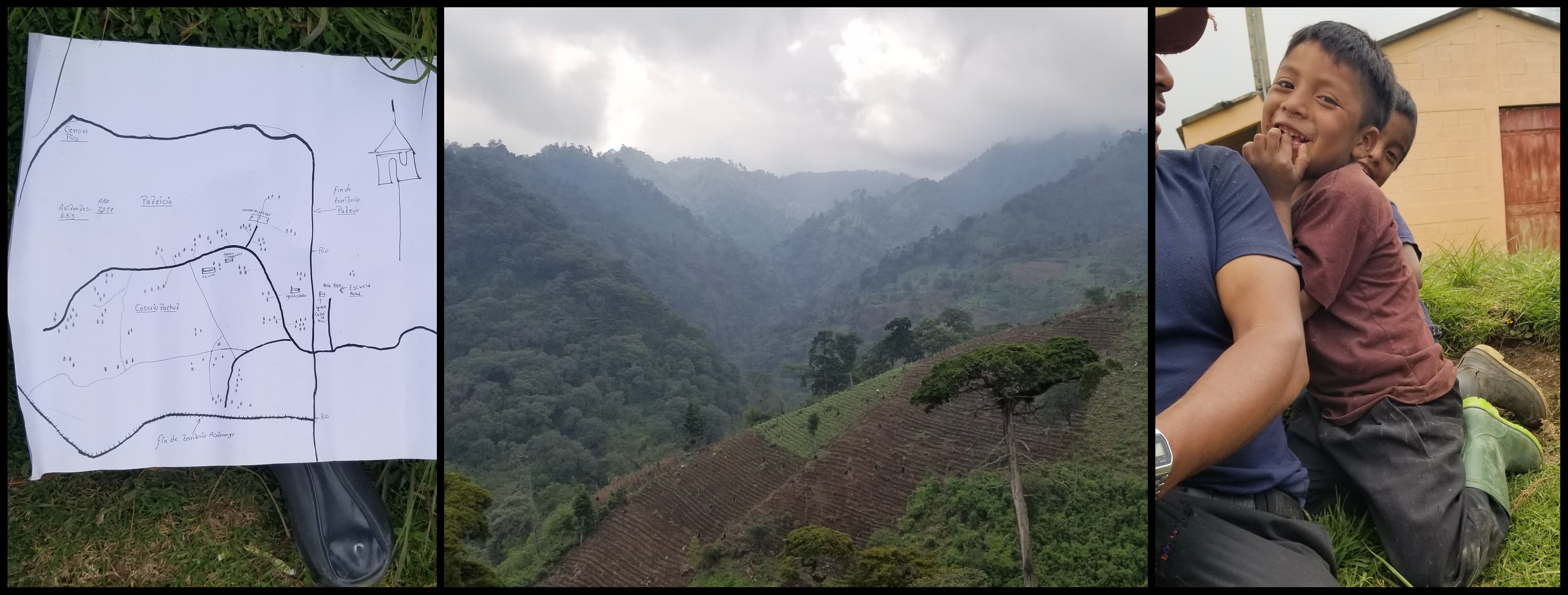
Despite the much thinner air than my accustomed 2,000′ elevation of Xela, I was still able to hike back up in just over three hours. It took a lot of team work to hoist each other up certain areas of the terrain, but the community members were encouraging and hilarious. Unfortunately, my coworker and I split up about halfway through the ascent because he needed to ride a horse the rest of the way up due to exhaustion. We did not end up returning to the rest of the group until about 4:30 pm. Ethan and I put the key into our front door around 8:30 pm, and feeling exhausted and ill, I went straight to bed.
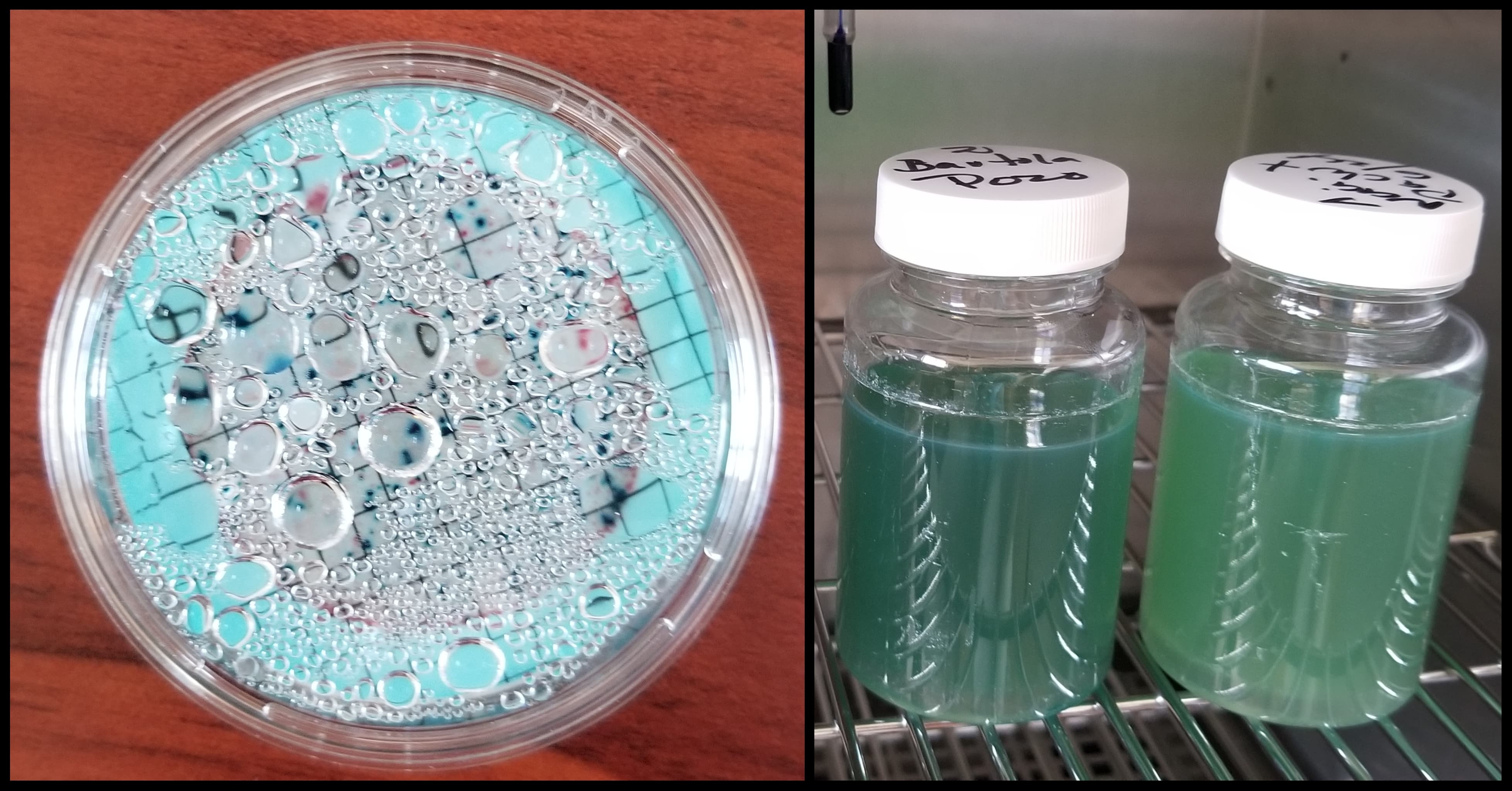
After incubating the water samples for several days, it was devastating to see a lot of red dots and shades of green, showing the strong presence of E. coli and bacteria in the water from all of the houses and schools and from the river at the bottom of the mountain where they wanted to bring water up. If Ethan and I drank that water, I am certain we would get deathly ill, but these communities have developed some sort of tolerance but at the cost of severe impact to their physiological and even psychological development.
Tuesday morning, Ethan and I returned to the office with an already tight, two-week deadline for the heat exchanger design cut in half. With an already shorter work week from the Monday site visit, Ethan and I strategized our short timeline to still finish with a quality design by Friday.
For two years now, I have been spearheading the first mechanical engineering project for MSOE-EWB to find improvements for the cardamom drying industry in Guatemala. Guatemala is the world’s largest producer and exporter of cardamom, the third most expensive spice by weight. Most current state-of-the-art Guatemalan cardamom drying machines consist of a wood burning heat source, a natural convection tube heat exchanger, and a diesel-powered fan to move clean air through the heat exchanger to a drying plenum. This basic and inefficient dryer design has been in use since the 1940’s with little to no optimization. Deforestation is a growing concern in Guatemala, and wood is becoming more expensive. This is decreasing the net profit for Guatemalan farmers by increasing the price to run a cardamom spice drying operation.
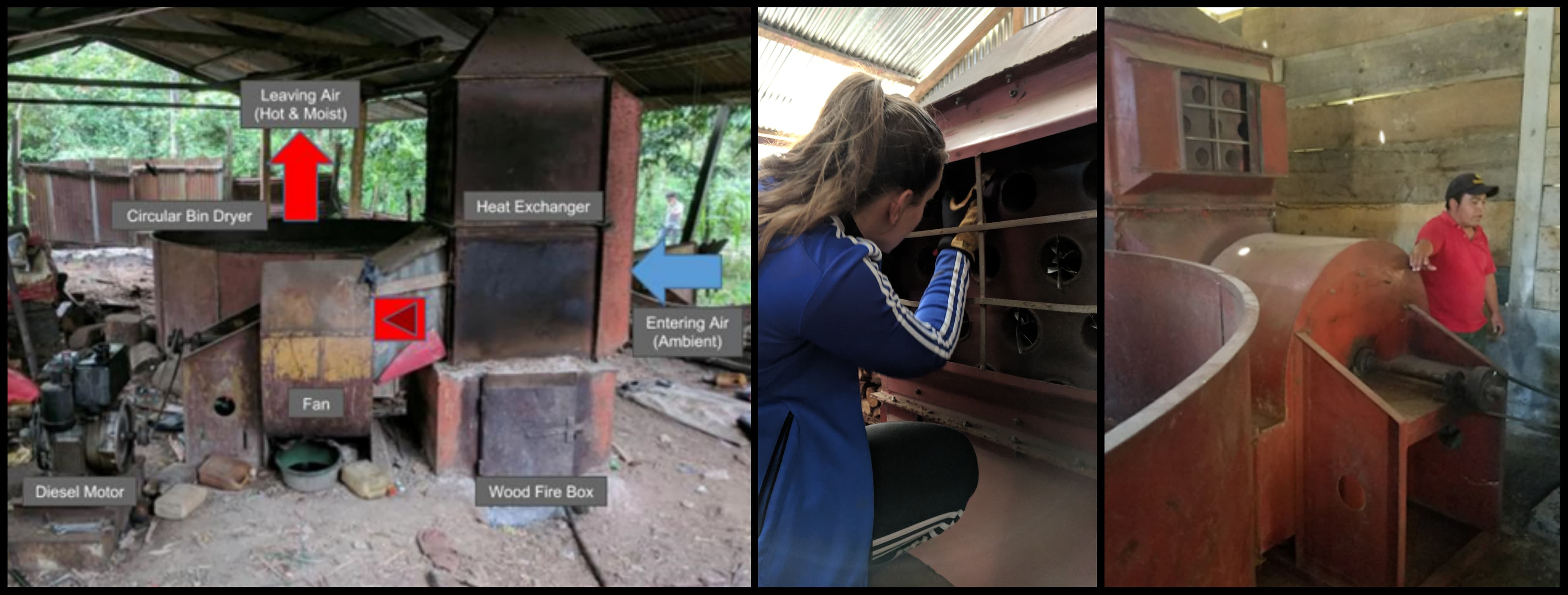
Through our partnership with Heifer International-Guatemala, the MSOE-EWB team has been seeking to improve efficiency of the cardamom spice dryer to save time and fuel through short-term, cost-effective retrofit solutions of the dryer. Heifer International has been bench-marking the seed drying process while simultaneously developing and testing other technologies and prototypes for potential long-term redesigns.
This summer, Ethan and I were responsible for designing the heat exchanger for Heifer’s most recent prototype which deviates greatly from the traditional dryers. Through the magical Excel solver function and thermodynamic analysis involving a hefty amount of Dittus-Boelter and Churchhill-Bernstein correlation manipulation into the Bernoulli equation, an optimal design was identified. I created an AutoCAD model of the system and set-up flow simulations to observe pressure losses, velocities, and flow trajectories. If you have a strong desire to hear more about the nitty gritty, just message me for our technical report.

Our boss had me explain our design to the manufacturer in Xela, and I must say technical Spanish is much more difficult than conversational. Now that the three meter long heat exchanger was under construction, Ethan and I were asked to design a fire box and structural supports for the heat exchanger. We have been running into some difficulties with the structural supports, especially with two groups building and designing sections of the dryer on different sides of the country and limited communication. I am nervous and strangely excited to travel to Cobán with this three meter long, 1250 lb box we designed hanging out the back of our boss’s truck for an 8 hour trip through the Guatemalan mountains.
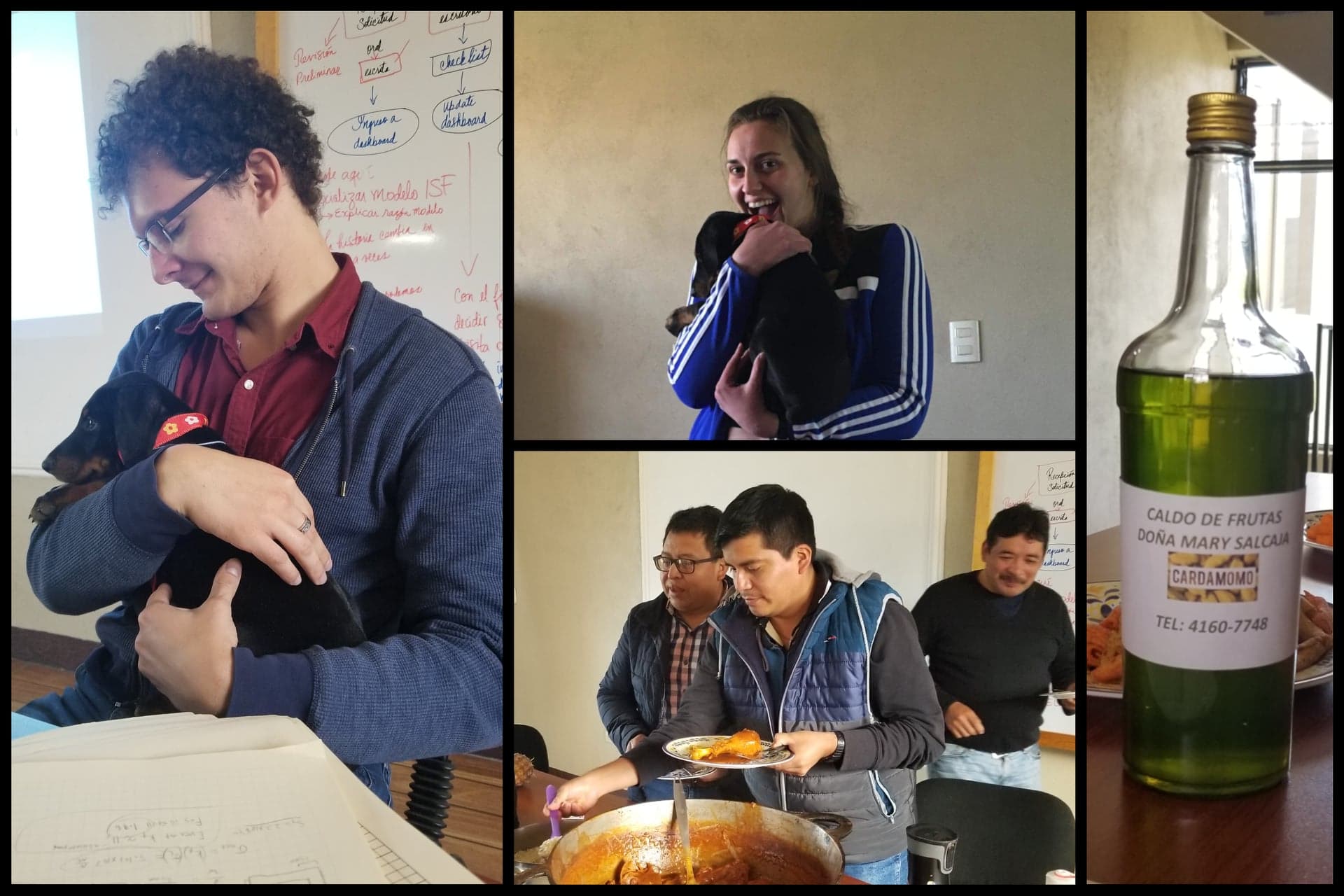
Our boss also brought his puppy into work on Friday, and we had a potluck celebration at the office with turkey and cardamom wine. Ethan loved the wine saying it tasted like Chartreuse, but I was not a fan and poured the rest in his glass.
As always, thanks for checking in, and happy Monday! It is a beautiful, rainy day in this world, and I am so grateful for your thoughts and prayers:
- Praise for Ethan’s new glasses, the frequent, mesmerizing thunderstorms, chocobananas, and the ability to video call
- Prayers for the design of the structural supports of the heat exchanger
- Continued prayers for the manufacturing, delivery, and implementation of the heat exchanger
- Prayers for the partnership with Heifer International and their new potential sponsor as they visit the new cardamom prototype we helped design
- Prayers for the financial and technical support of Guatemalan projects to meet basic human needs, especially water projects
- Prayers for the communities still recovering from the adverse eruption of Volcán de Fuego last summer

 Tenemos Esperanza
Amazing Blogs Nikky! Your writing paints a picture of what you are experiencing. Thank you for sharing your adventures!
LikeLike